Inventory Audits vs. Cycle Counts: Which Is Better for SMBs?
WareOS Team ·

1. What's the difference between an inventory audit and a cycle count?
An inventory audit (often called a physical inventory) is a complete count of every item in your warehouse, usually done once a year. It's a full-stop event: you shut down operations, bring in extra staff, and spend days or weeks counting everything. In contrast, a cycle count is an ongoing process where you count a small subset of your inventory each day or week. Over time, you cycle through all items, but you never stop operations. WareOS supports both methods, but cycle counting is far more popular among our SMB customers because it keeps your business running.
2. Why do annual audits often fail for growing businesses?
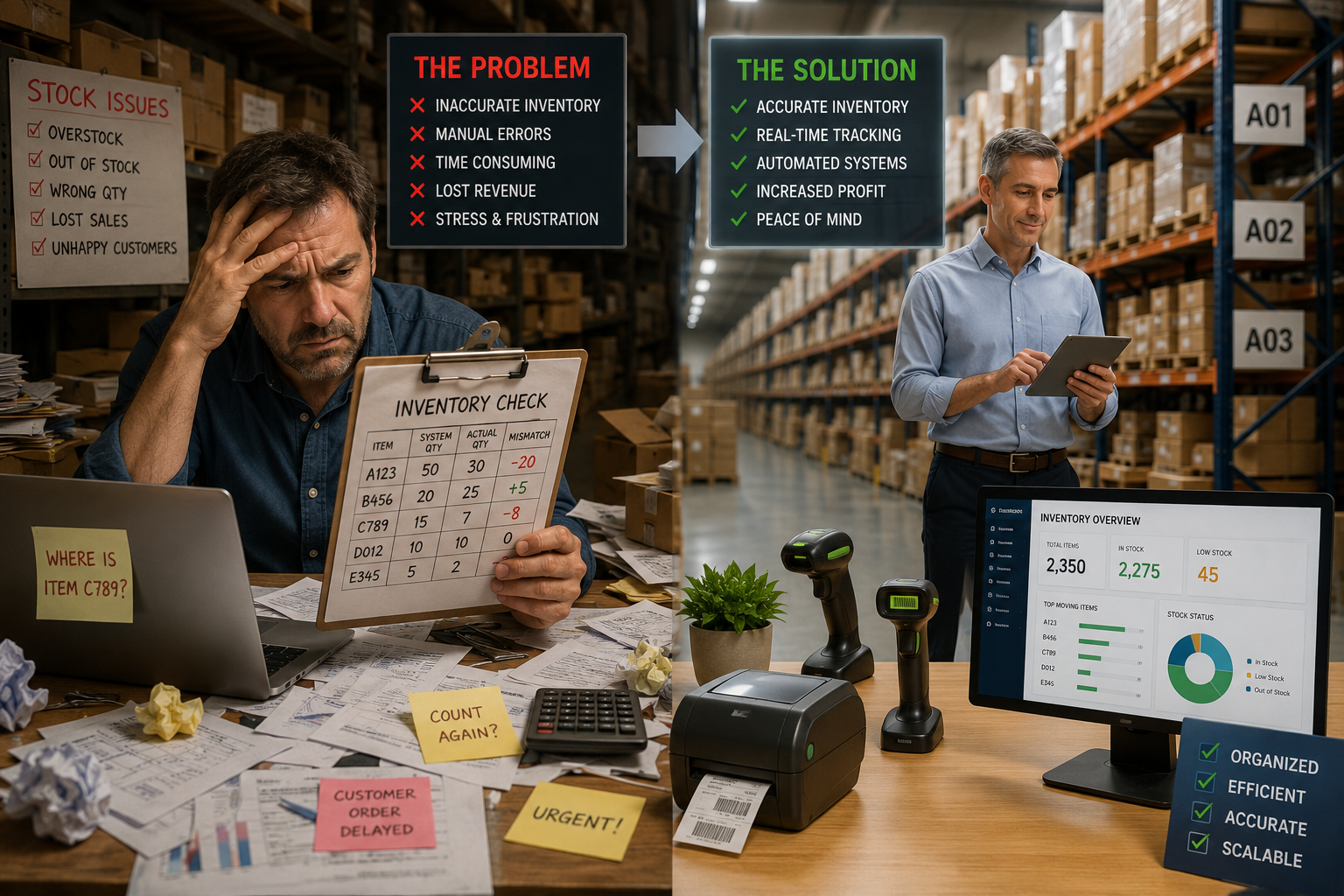
Annual audits have several drawbacks for SMBs. First, they are disruptive. Closing your warehouse for a full day or more means lost sales and delayed shipments. Second, they are stressful and error-prone. When staff are rushing to count thousands of SKUs, mistakes happen. Third, by the time you finish the audit, your inventory may already be inaccurate again. It's a snapshot that ages quickly. For example, a wholesale distributor we worked with used to do a year-end audit. Every January, they'd find discrepancies, but by March, the data was already off by hundreds of units. They needed a real-time solution.
3. How does cycle counting provide ongoing accuracy?
Cycle counting works by dividing your inventory into manageable chunks. You count a portion of your SKUs each day, often focusing on high-value or fast-moving items more frequently. This approach has several benefits: it minimizes disruption, catches errors early, and builds a culture of accuracy. For instance, you might count your top 20% of SKUs (by value) every week, and the rest monthly or quarterly. With a cloud system like WareOS, you can schedule cycle counts, assign them to staff via the mobile app, and track results in real time. A retailer we know reduced their shrinkage by 40% in just three months by switching from annual audits to daily cycle counts.
4. Which method is more cost-effective for SMBs?
Cycle counting is generally more cost-effective because it uses existing staff during normal operations. You don't need to pay overtime or hire temporary workers. Annual audits, on the other hand, often require extra labor and can lead to lost sales from warehouse closures. Additionally, cycle counting reduces carrying costs by keeping inventory accurate, so you don't overstock or run out of stock. If you're curious about specific strategies, check out our guide on how cycle counting cuts inventory shrinkage.
5. How do you implement a cycle counting program in your warehouse?
Implementing cycle counting doesn't have to be complicated. Start by categorizing your inventory using ABC analysis: A items are high-value but few in number, B items are moderate, and C items are low-value but numerous. Count A items weekly, B monthly, and C quarterly. Use a reliable inventory system, like WareOS, to manage your counts, track discrepancies, and adjust stock levels immediately. Train your team on proper scanning techniques and make cycle counting a daily habit. Remember, the goal is not perfection on day one, but steady improvement. Over time, cycle counting will save you time, money, and headaches. For more tips on maintaining accuracy, read our article on how to solve inventory inaccuracy in 30 days.